
Managed Infrastructure
Know what your network depends on—and who owns each part.
Business connectivity often spans gateways, switches, Wi-Fi, phones, cameras, recorders, and sometimes cellular backup. An initial conversation can identify which systems, documentation, installation, or ongoing-management tasks, if any, warrant a separately scoped proposal. The exact devices, tasks, response arrangements, and price depend on the site and a written agreement.
- Network inventory and ownership
Map gateways, switches, access points, phones, cameras, recorders, and links; identify administrators, licenses, warranties, and vendor responsibilities.
- Operational visibility
Decide which devices need alerting, configuration records, firmware review, and health reporting—and who will act when an issue appears.
- Continuity planning
Assess whether a secondary internet connection or cellular failover fits the site’s payment, phone, cloud-app, and remote-access needs. Actual failover behavior requires design and testing.
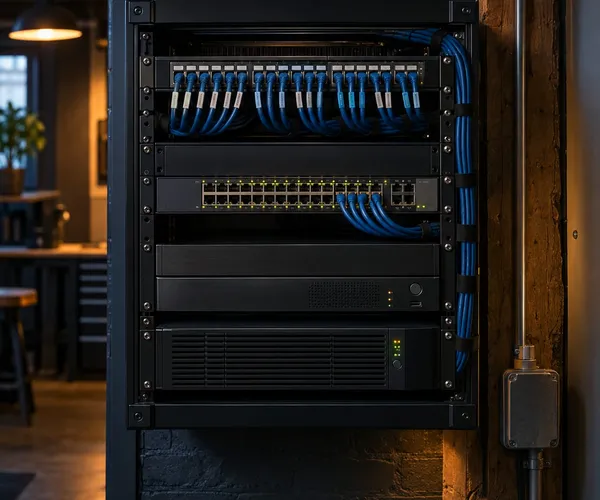
Scope and cost questions
A per-device count alone does not describe the work. Before quoting, identify device types, sites, existing configurations, access rights, documentation quality, alert response, onsite needs, and any hardware or licensing costs. Installation and ongoing services should be separated in the proposal. No monthly rate, minimum device count, or included management task is established by this page.
Where UniFi may fit
UniFi is one platform that can bring network devices into a common management interface. Whether to retain an existing UniFi environment, use different equipment, or compare a Meraki renewal depends on coverage, support, lifecycle, ownership, and total cost—not a brand alone. Product capabilities and any WOLFTRAXX SYSTEMS management responsibilities should be confirmed for the proposed design.
A practical review sequence
- Identify what to discuss — Note known locations, network boundaries, critical applications, devices, and current administrators.
- List open questions — Flag coverage, connectivity, power, documentation, alert handling, and vendor dependencies for a proposed review.
- Define possible work — Distinguish technical site review or documentation from configuration changes, replacement projects, and possible ongoing services.
- Agree in writing — Any technical site review, documentation work, implementation, or recurring management starts only after its scope, exclusions, owner, and fee are agreed in writing.
If you already have UniFi or Meraki, start with what you own and the problem you need solved. The WOLFTRAXX SYSTEMS UniFi network planning sheet helps organize locations, device needs, network boundaries, and post-install ownership before a network conversation.